

Competitively Priced Bamboo Knife and Fork Factory from China: Bamboo Forever Report
News originally published by
EIN Presswire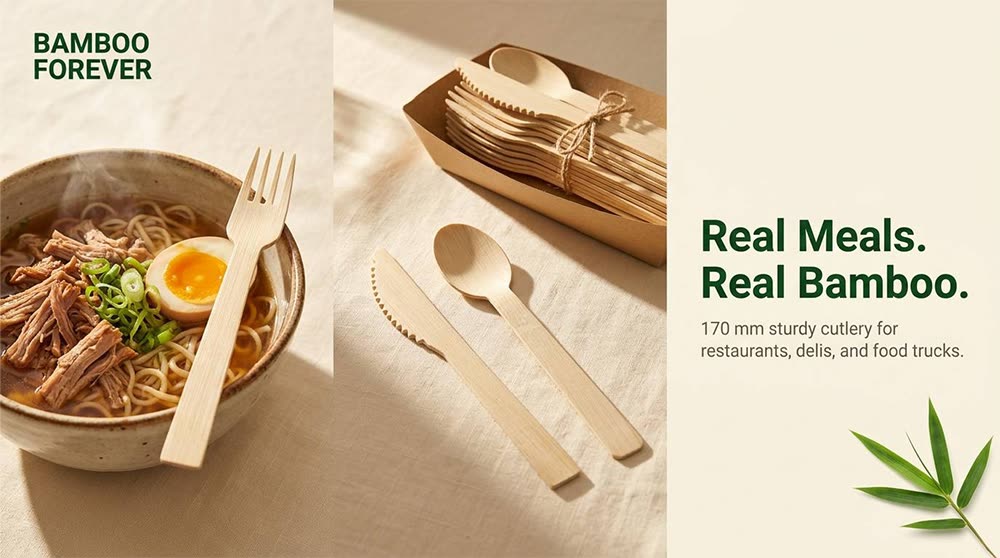
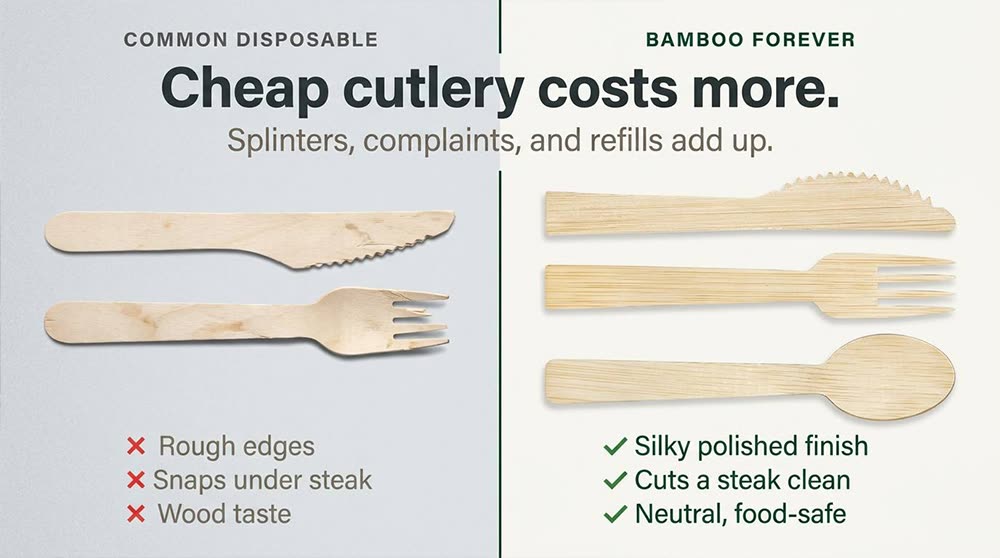
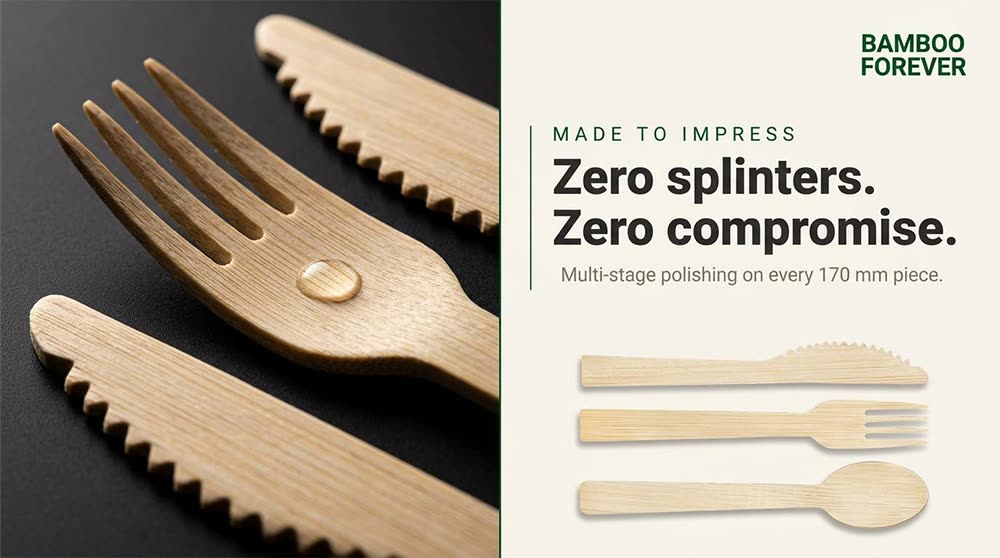
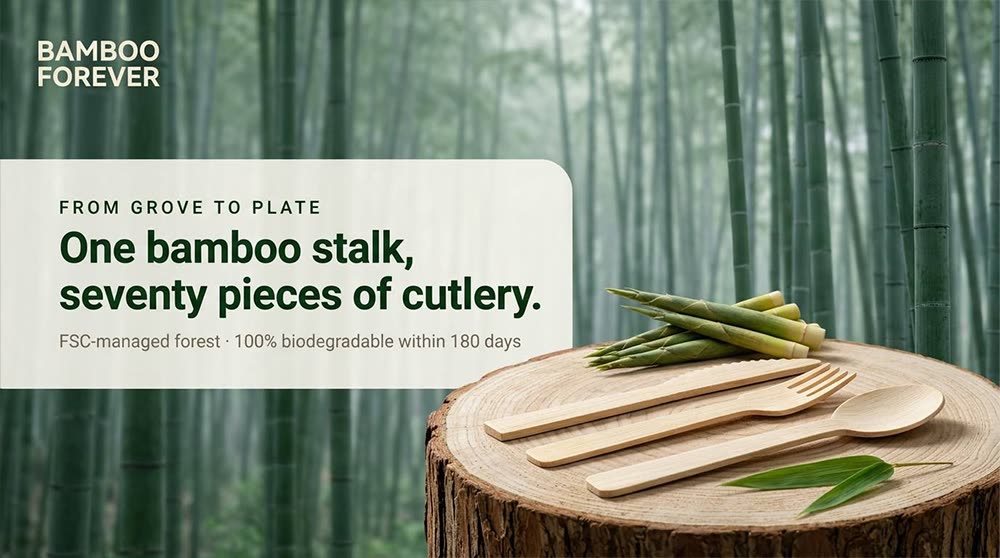
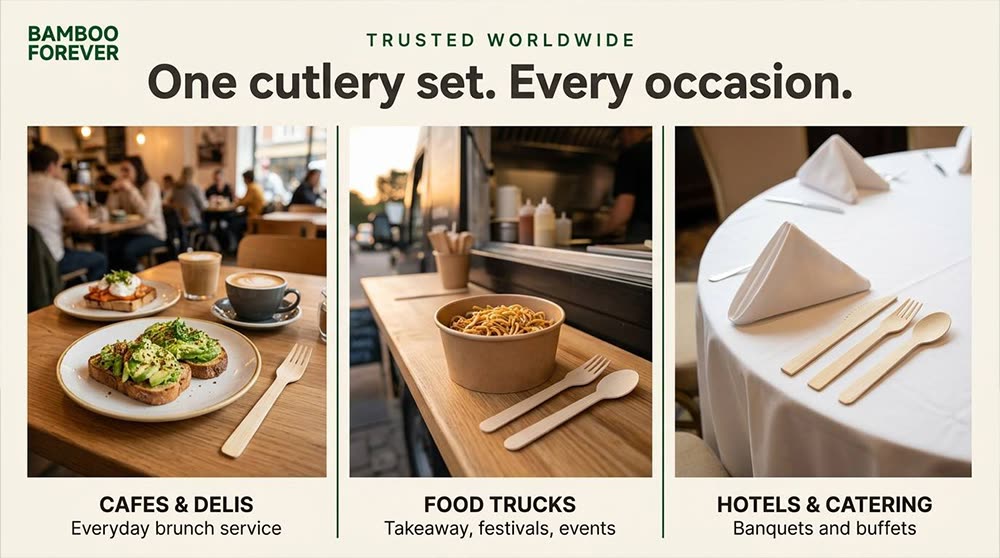
A purchasing manager for a regional catering supplier reviews the incoming inspection reports for the latest batch of bio-based disposable tableware, noting a persistent percentage of edge splinters and structural fractures. This scenario reflects a common dilemma among global buyers who manage commercial food service and retail inventory: entry-level bio-disposables often suffer from mechanical vulnerabilities or non-compliance, while high-grade certified alternatives command substantial premiums that compress retail margins. Resolving this operational friction requires identifying a reliable, competitively priced bamboo knife and fork factory from China that balances structural uniformity with scalable economic value. High-volume procurement requires a clear understanding of the manufacturing factors that allow a product to remain highly affordable without sacrificing the physical integrity required for commercial catering.
A realistic examination of supply chain logistics and manufacturing methodologies shows that sustainable cost reductions come from systematic process efficiencies rather than compromised material grades. Guilin Bamboo Forever Technology Co., Ltd. serves as a relevant model for analyzing how factory-level integration influences market pricing and product reliability in the modern food service sector. By looking past surface-level quotes, global distribution firms can understand how dedicated manufacturing networks stabilize overhead, manage strict regulatory frameworks, and maintain consistent quality metrics without driving up supply expenses for end users.
Vertical Integration and Economies of Scale at the Source
Analyzing the cost structure of wooden and bamboo utensils requires looking closely at the physical infrastructure of production. True cost optimization depends on large-scale automation and direct access to raw materials, rather than relying on multi-tier trading brokers. Operating a 40,000-square-meter manufacturing facility equipped with 76 automated production lines enables Bamboo Forever to maintain complete control over production timing and overhead expenses. The manufacturing setup structures scheduling so that 140mm and 170mm bamboo forks share continuous production lines with matching bamboo knives, which significantly reduces machinery downtime.
This synchronized manufacturing method reduces machinery downtime and minimizes the labor retooling costs associated with shifting product sizes. Additionally, establishing production assets adjacent to FSC-certified bamboo resources in Guilin minimizes regional log transportation expenses. Processing raw bamboo culms immediately upon arrival preserves tensile strength and controls moisture levels. By implementing unified automated drying and automated tumbling systems, the bamboo knife and fork factory from China decreases energy consumption per product unit, passing these core savings directly to buyers as competitive factory-direct pricing.
Component Customization and Logistics Optimization
Product flexibility and packaging variations represent another dimension of efficiency for international procurement managers. Standard product catalogs from a bamboo knife and fork factory from China focus heavily on standard lengths, such as the 140mm and 170mm bamboo fork options designed for international catering and retail displays. Matching specification bamboo knife variations are processed on the same lines to ensure uniform thickness and edge sharpness across mixed-product shipments. Catering to diverse commercial buyers demands flexible packaging, including bulk loose packing for high-volume kitchens, individual wrappers, kraft paper bags, and retail-oriented hanging display boxes containing 25 or 100 units. Utilizing high-temperature heat-stamping for corporate logos allows global distributors to fulfill regional regulatory standards and brand requirements.
Beyond individual item configuration, shipping logistics play a crucial role in determining the final landed cost of a competitively priced bamboo knife and fork order. Consolidating complementary items, such as matching bamboo spoons or multi-piece utensil sets within a single shipping container, maximizes total container volume utilization. Achieving maximum volumetric capacity under standard Free On Board terms minimizes unit freight costs, showing how smart product mixing acts as an effective tool for lowering landed expenses. Proper load planning eliminates structural voids inside the transport holds, cutting down on shifting damages during long transit routes.
Mitigating Hidden Operational and Compliance Costs
Traditional supply strategies that prioritize immediate unit discounts often fail to account for the financial impacts of high product defect rates and severe customs compliance penalties. Standard low-cost disposable utensils often skip intensive thermal treating, leaving finished goods vulnerable to humidity retention, mold growth, or splitting when exposed to dense foods. Guilin Bamboo Forever Technology Co., Ltd. counteracts these issues by integrating high-temperature boiling and conditioning cycles directly into the automated processing line. This thermal procedure extracts natural starches and sugars from the raw fibers, making the finished bamboo highly resistant to mold growth without using chemical additives.
Ensuring that a competitively priced bamboo knife and fork retains a clean cutting edge and that fork tines resist snapping under normal mechanical stress directly lowers customer complaints and expensive returns. For international procurement teams, avoiding shipping delays or custom rejections due to inadequate food-contact certification is an essential risk-management strategy. Maintaining verified international safety certificates protects buyers from regulatory penalties, validating the true commercial utility of a well-monitored production line. Minimizing product handling challenges lowers overhead costs, protecting retail margins far better than lower-grade alternatives.
Strategic Sourcing and Long-Term Procurement Value
Evaluating commercial supply partners requires looking beyond basic unit costs to examine operational continuity and process transparency. Bamboo Forever demonstrates that sustaining a strong market position results from combining source material access, extensive automation, and strict quality controls. This systematic methodology allows corporate buyers, restaurant groups, and e-commerce distributors to secure stable inventory without sacrificing margin targets or regulatory compliance. As commercial buyers refine their purchasing models, working with an integrated bamboo knife and fork factory from China remains an effective path toward predictable supply costs and dependable item quality.
Guilin Bamboo Forever Technology Co., Ltd. provides a structured approach where production scale, component flexibility, and rigorous product safety metrics eliminate downstream liabilities. By keeping overhead transparent and running balanced production schedules, the entity addresses the long-term logistical risks that often trouble conventional sourcing projects. Commercial entities seeking to balance operational budgets with verified quality parameters can obtain material samples and structured volume quotes by visiting the official digital platform at https://www.bf1998.com/.
Bamboo Forever
Bamboo Forever
Legal Disclaimer:
EIN Presswire provides this news content "as is" without warranty of any kind. We do not accept any responsibility or liability for the accuracy, content, images, videos, licenses, completeness, legality, or reliability of the information contained in this article. If you have any complaints or copyright issues related to this article, kindly contact the author above.
