

Reliable Table top Chocolate Depositor Manufacturer vs. Traditional Methods: An LST Technical Comparison
Understanding Small-Batch Processing Challenges in Craft Confectionery
Small-scale chocolate manufacturing operates under unique operational constraints. Unlike large industrial factories running continuous high-volume production lines, boutique artisans and pilot testing labs handle frequent recipe adjustments, varied mold dimensions, and smaller batch sizes. In these environments, traditional manual processing techniques have historically served as the standard entry point due to their low initial capital expenditure. However, relying on manual labor introduces significant variability into daily workflow.
Manual chocolate deposition depends heavily on individual operator skill, hand coordination, and physical fatigue levels over extended shifts. When workers use ladles, squeeze bottles, or manual funnels to fill intricate molds, slight deviations in pour speed and wrist positioning result in uneven cavity fill levels. Over time, these small variations add up to noticeable piece-weight inconsistencies, leading to compliance issues with packaged weight labels and unexpected ingredient loss. Furthermore, manual handling increases total contact time between operators and active ingredients, complicating sanitation protocols during facility inspections and quality checks.
Beyond piece-weight variation, manual batching places severe limits on daily throughput. Artisanal producers frequently struggle to balance the time-consuming nature of hand pouring with growing customer orders. Attempting to accelerate manual output often compromises product aesthetics, resulting in air bubbles, uneven surfaces, or messy mold edges that require extra labor to clean and trim. These operational friction points highlight the need for mechanical solutions specifically engineered for benchtop application environments.
Temperature Management: Independent Dual-Zone Thermal Control vs. External Water Baths
Thermal regulation represents the most critical parameter in chocolate processing. Chocolate requires precise thermal boundaries to retain its crystalline structure, glossy finish, smooth mouthfeel, and clean snap upon breaking. Traditional workshop methods typically rely on separate water baths, double boilers, or external heat guns positioned near the working station. Confectioners visually monitor chocolate viscosity and adjust temperatures through manual trials, which often leads to unintended fat bloom, streaking, or premature crystallization during longer production runs.
In contrast, modern benchtop chocolate depositor designs integrate self-contained, multi-zone thermal management systems directly into the chassis. Chengdu LST Science and Technology Co., Ltd. addresses thermal control through dedicated heating configurations across its small-scale equipment lines. In compact units like the CHOCO-D1 5.5L model, the system separates tank heating from screw dispensing heating. Operators set predefined profiles, such as melting at 55°C and holding at 38°C, with thermal limits reaching 65°C.
For multi-nozzle benchtop units, separate heating elements supply heat to both the hopper and the nozzle plate up to 130°C. This integrated thermal stability eliminates external open water sources near the processing channel, substantially reducing water contamination risks, preventing humidity fluctuations around the chocolate melt, and maintaining smooth fluid movement throughout continuous operation.
Dosing and Recipe Changeovers: Servo-Driven Piston Precision vs. Manual Pouring
Precision dosing directly impacts product profit margins and regulatory compliance. Manual chocolate deposition relies on visual estimation, making precise volumetric metering nearly impossible across hundreds of individual mold cavities. In contrast, mechanized dosing replaces manual estimates with measurable, repeatable mechanical output. In the 10-piston PLC benchtop molding unit developed by Chengdu LST Science and Technology Co., Ltd., a servo drive regulates piston travel to deliver precise volumetric shots between 1 gram and 4.5 grams per nozzle. Operating at adjustable speeds from 30 to 60 strokes per minute, the 10 removable nozzles line up directly with standard mold layouts to fill entire cavity rows simultaneously.
For smaller pouring applications or varied container formats, variable-flow systems offer automatic, intermittent, and foot-pedal triggering modes, allowing operators to adapt dispensing speed to specific production demands. Clean down-time between different recipe runs also presents a major operational challenge. Manual ladles, squeeze bottles, and funnels require individual washing, soaking, and thorough drying to prevent moisture from seizing the next chocolate batch.
To shorten product changeovers and reduce labor costs, engineered benchtop systems incorporate specialized cleaning features. For instance, reverse-screw purge cycles clear out residual chocolate from the feed channel before cleaning, while toolless disassembly allows operators to remove nozzles, hoppers, and pistons quickly for thorough sanitation and rapid recipe transitions.
Spatial Footprint and Compliance: Built-In Sanitary Engineering vs. Benchtop Clutter
Spatial limitations in retail shop kitchens, testing laboratories, and hotel pastry sections make heavy industrial machinery impractical. While manual production requires minimal initial space for dedicated equipment, it fills workspace counters with an assortment of pots, hot plates, temper pans, water bowls, and manual fill bottles. This fragmented setup clutter creates workflow friction in compact spaces, elevates the risk of accidental spills, and complicates routine hygiene reviews.
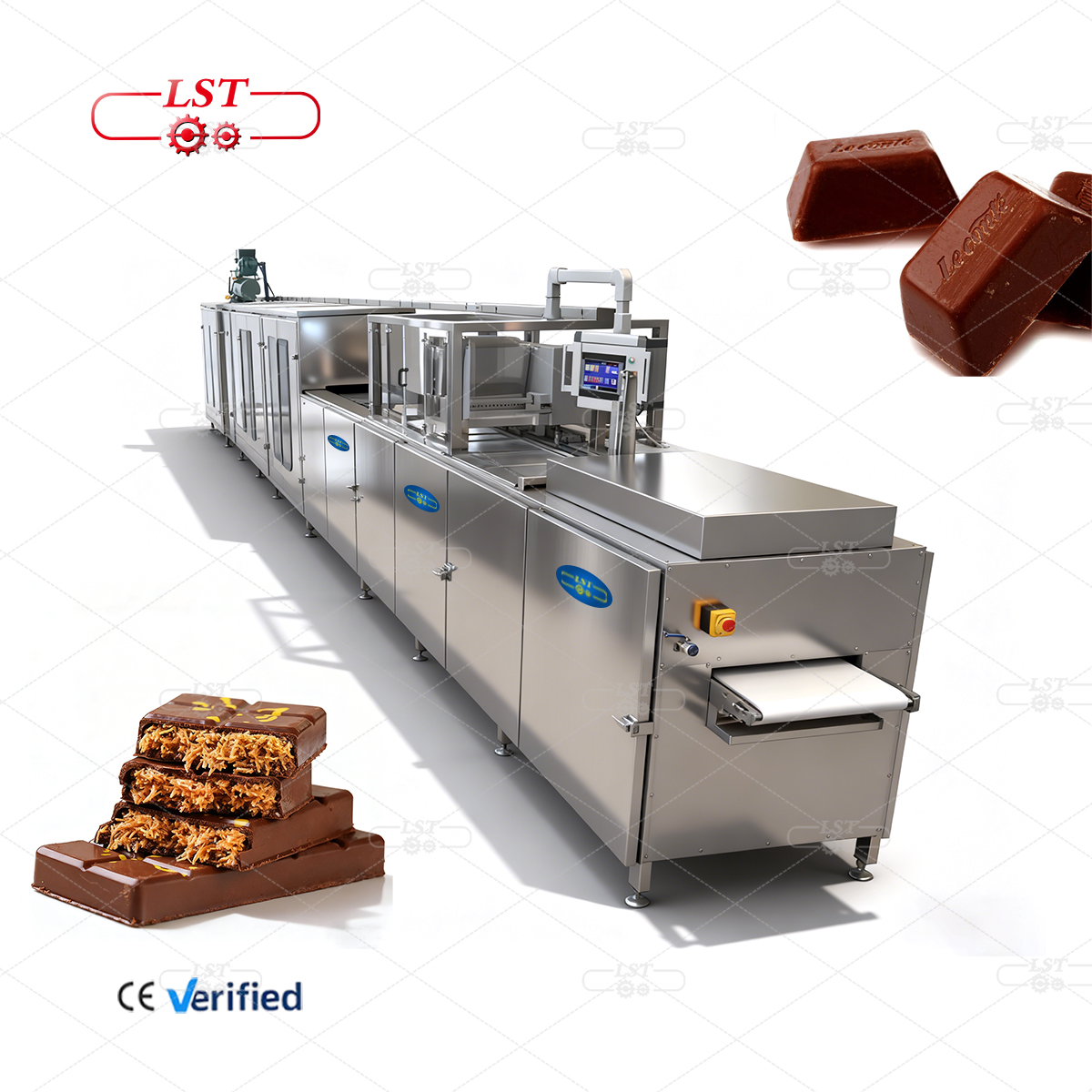
Engineered benchtop systems pack professional processing features into a compact, standardized footprint. A well-designed table top chocolate depositor functions as a standalone tabletop appliance or integrates directly into custom service counters. Units such as the CHOCO-D1 feature outer dimensions of 390 by 460 by 830 millimeters with a low 0.95 kW power draw, making them compatible with standard single-phase electrical outlets found in commercial kitchens.
Similarly, LST 10-piston benchtop chocolate molding machine units measure 620 by 550 by 600 millimeters, weigh 60 kilograms, and include a 12-liter hopper built entirely from food-grade SUS304 stainless steel. Certified under international CE and ISO9001 quality management standards, these compact systems meet strict commercial hygienic requirements, allowing small-scale confectioners to pass facility audits and regulatory inspections smoothly.
Standardizing Small-Batch Confectionery Production
Transitioning from manual pouring techniques to benchtop mechanical deposition represents a practical, scalable upgrade path for growing chocolate businesses. Rather than relying on theoretical maximum capacity claims, daily performance improvements show up in measurable operational benefits: stable multi-zone temperature management, uniform mold cavity filling, reduced material wastage, and streamlined cleanup procedures between production runs.
By housing multi-zone heating components, toolless disassembly structures, PLC servo dosing controls, and food-grade stainless steel construction within a space-saving footprint, Chengdu LST Science and Technology Co., Ltd. provides small-batch producers with consistent product output and lower labor overhead. As consumer preferences continue shifting toward specialized, high-quality craft chocolates, adopting professional benchtop equipment helps craft confectioners protect product quality, improve daily efficiency, reduce waste, and expand their businesses sustainably.
Learn more about professional confectionery machinery and customized equipment options at: https://www.lst-machine.com/
Chengdu LST Science and Technology Co., Ltd.
Chengdu LST Science and Technology Co., Ltd.
+86 177 8051 0820
email us here
Visit us on social media:
Facebook
YouTube
Legal Disclaimer:
EIN Presswire provides this news content "as is" without warranty of any kind. We do not accept any responsibility or liability for the accuracy, content, images, videos, licenses, completeness, legality, or reliability of the information contained in this article. If you have any complaints or copyright issues related to this article, kindly contact the author above.
