

Frozen Yogurt Market to Reach USD 12.17 Billion by 2035, Growing at 6.44% CAGR
Frozen Yogurt Market
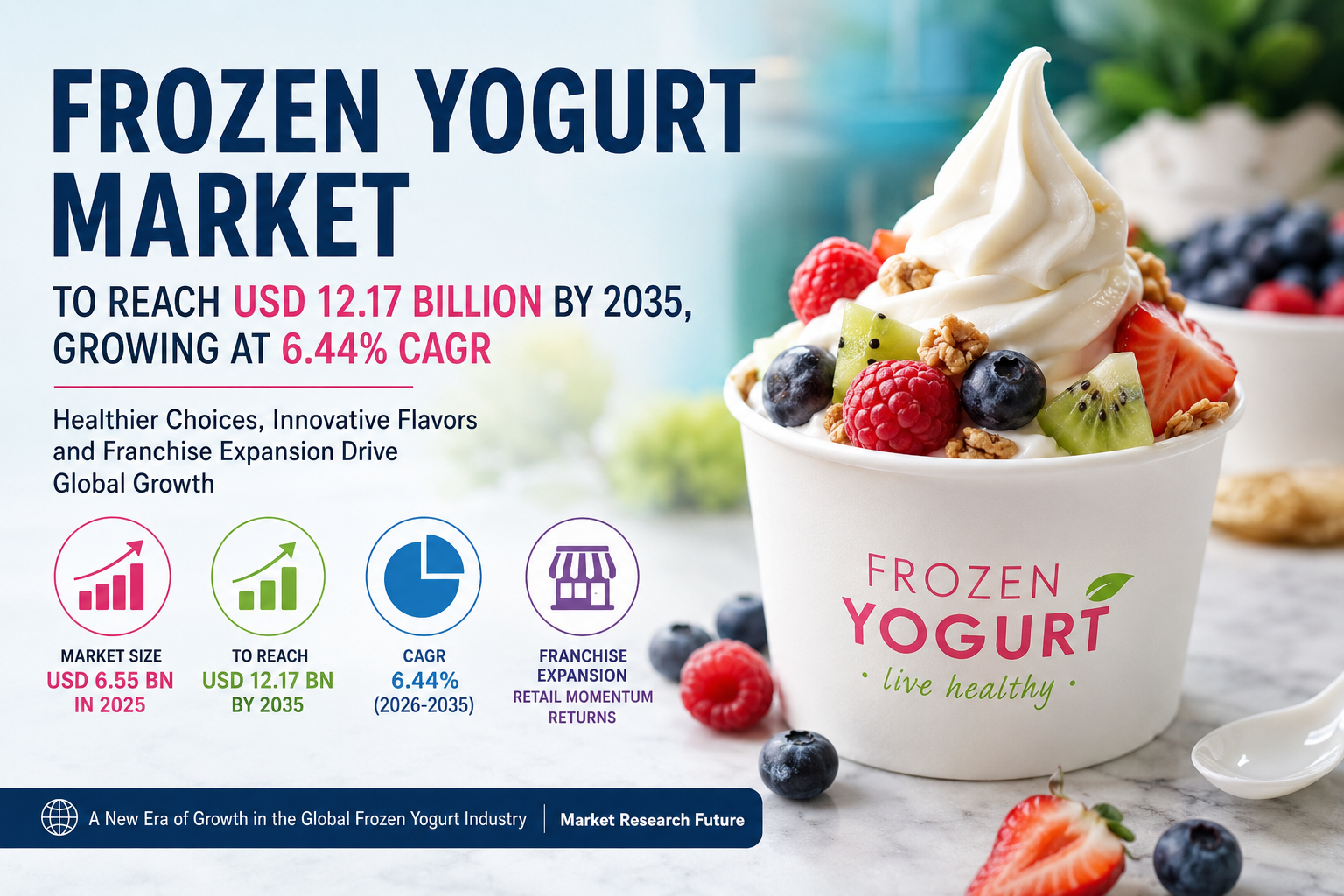
Market rises from USD 6.55 billion in 2025 to USD 12.17 billion by 2035 as healthier formulations and retail expansion reshape frozen desserts.
Health-focused innovation and renewed franchise expansion are positioning frozen yogurt for its next major phase of global growth.”
NEW YORK, NY, UNITED STATES, August 27, 2026 /EINPresswire.com/ -- The global frozen yogurt market is entering a sustained expansion phase, with market valuation projected to increase from USD 6.55 billion in 2025 to USD 6.94 billion in 2026 and reach USD 12.17 billion by 2035, registering a 6.44% compound annual growth rate (CAGR) from 2026 to 2035, according to Market Research Future.— Market Research Future (MRFR)
The market's projected growth reflects a broader transformation in frozen desserts as consumers increasingly seek products that combine indulgence with attributes associated with nutrition, cultured dairy, portion control and ingredient transparency. At the same time, manufacturers and retail operators are expanding beyond traditional formulations through reduced-sugar recipes, plant-based alternatives, protein-forward products, new flavor profiles and flexible store formats.
Two developments are particularly important to the category's next growth phase. First, the U.S. Food and Drug Administration's updated definition of the voluntary “healthy” nutrient content claim, finalized in December 2024, places greater emphasis on food groups and limits for nutrients such as added sugars, saturated fat and sodium. The updated criteria became available for use on April 28, 2025.
Second, franchise-based frozen yogurt retail is showing renewed expansion activity. Established operators are emphasizing flexible footprints, self-service formats, non-traditional locations and lower-complexity operating models, while newer investment activity is creating opportunities for brands to reach additional cities and consumer segments.
Market Growth Reflects a Changing Frozen Dessert Landscape
Frozen yogurt has evolved considerably beyond its earlier positioning as simply a lower-fat alternative to conventional ice cream. Today's category encompasses traditional dairy-based products, Greek-style frozen yogurt, reduced-sugar formulations, functional varieties, non-dairy alternatives and customized foodservice experiences.
According to Market Research Future, the global frozen yogurt market is forecast to rise from USD 6.55 billion in 2025 to USD 12.17 billion by 2035. The market is expected to reach approximately USD 9.48 billion by 2031, maintaining a 6.44% CAGR during the 2026–2035 forecast period.
This growth trajectory reflects structural changes in how consumers approach frozen desserts. Rather than viewing frozen yogurt solely as an occasional sweet treat, consumers are increasingly evaluating products according to attributes including sugar content, protein, dairy composition, ingredient quality, portion size and dietary compatibility.
That shift is encouraging manufacturers to develop products that can occupy multiple consumption occasions. Frozen yogurt can function as a dessert, snack, post-meal treat or customizable foodservice experience, giving brands multiple opportunities to build repeat purchasing.
Get Full PDF Sample Copy of Report: (Including Full TOC, List of Tables & Figures, Chart) @ https://www.marketresearchfuture.com/sample_request/2736
Updated FDA “Healthy” Criteria Highlight Reformulation Opportunities
Nutrition positioning is becoming increasingly important to the frozen dessert sector.
In December 2024, the FDA finalized an updated definition of the voluntary “healthy” nutrient content claim. The revised framework is designed to align the claim more closely with current nutrition science and federal dietary guidance. Under the updated criteria, qualifying foods must contain a specified amount of food from recommended food groups and meet limits for added sugars, saturated fat and sodium.
The development is relevant to frozen yogurt manufacturers because cultured dairy products can fit within the food groups considered under the updated framework. However, eligibility for the “healthy” claim is product-specific and depends on meeting all applicable regulatory criteria; the regulatory change should therefore be viewed as an incentive for reformulation and transparent nutrition positioning rather than an automatic claim for the category.
The FDA's own examples indicate that plain low-fat or fat-free yogurt can qualify under the updated definition when applicable requirements are met.
For frozen yogurt producers, this environment could encourage greater attention to added sugar reduction, nutrient composition, serving sizes and formulation architecture. Companies capable of balancing lower sugar with desirable taste, texture and freezing characteristics may be better positioned to serve consumers who want healthier attributes without abandoning indulgence.
The opportunity extends beyond the U.S. market. Nutrition-conscious consumers globally are placing greater emphasis on ingredient labels and product functionality, creating a favorable environment for brands that can communicate credible nutritional and formulation benefits without overstating health claims.
Reduced-Sugar Formulations Create Both Opportunity and Technical Challenges
Reducing sugar in frozen yogurt is not simply a matter of removing sweetener.
Sugar contributes to sweetness, texture and freezing behavior. Lower-sugar formulations can therefore require careful balancing of solids, sweetness, freezing point and mouthfeel to maintain the sensory characteristics consumers expect.
Market participants are consequently investing in formulation technologies designed to preserve creaminess and flavor while lowering added sugar. This creates opportunities for ingredient suppliers, dairy processors and frozen dessert manufacturers with expertise in cultures, sweetening systems, stabilizers and texture management.
The successful products will likely be those that make healthier positioning feel like an enhancement rather than a compromise.
That distinction is particularly important in a category built around enjoyment. Consumers may express interest in healthier desserts, but repeat purchasing ultimately depends on taste, texture, convenience and value.
Plant-Based and Non-Dairy Products Expand the Addressable Market
Another major growth opportunity is the expansion of non-dairy and plant-based frozen yogurt-style products.
Consumers are increasingly looking for alternatives that accommodate lactose avoidance, dietary preferences and broader interest in plant-based eating. This is encouraging brands to experiment with oat, coconut, almond and other plant-derived bases while seeking to reproduce the tanginess, creaminess and texture associated with conventional cultured products.
Market Research Future identifies non-dairy/plant-based products as one of the fastest-growing segments within the frozen yogurt market.
The opportunity is particularly significant because plant-based products can attract consumers who may not previously have considered frozen yogurt. Instead of competing exclusively for existing dairy consumers, brands can use alternative formulations to broaden the category's consumer base.
Product innovation is also expanding beyond the base itself. Manufacturers are exploring fruit inclusions, premium toppings, functional ingredients, high-protein positioning and new flavor combinations designed to appeal to younger and more adventurous consumers.
Franchise Expansion Reopens a Key Retail Growth Channel
The second major catalyst for the category is renewed activity around franchised retail.
Frozen yogurt has long been compatible with franchising because many concepts can operate with relatively simple menus, standardized preparation systems, limited kitchen requirements and flexible store footprints. Self-service models can also allow consumers to customize portions, flavors and toppings while creating an experience that differentiates frozen yogurt from packaged desserts.
Current franchise activity demonstrates that operators continue to see expansion opportunities in the category.
Yogurtland, for example, highlights flexible real estate options and non-traditional locations including travel plazas, airports, transit terminals, stadiums, hospitals, universities, shopping destinations and cinemas.
TCBY likewise promotes multiple formats, including traditional stores and smaller-format concepts, while emphasizing operational simplicity and dietary-inclusive product options.
Recent industry activity provides an additional signal. In January 2026, 16 Handles announced that it had opened eight stores across four U.S. states during 2025 and signed 25 new franchise agreements, taking its system to more than 67 units.
These developments suggest that franchising is becoming an important mechanism for bringing frozen yogurt back into high-traffic retail environments while allowing operators to test smaller and non-traditional formats.
Flexible Store Formats Could Improve Expansion Economics
The traditional frozen yogurt storefront is no longer the only path to market.
Kiosks, food-hall concepts, mall locations, travel hubs, university sites, mixed-use developments and other compact footprints can give brands access to consumers without requiring a conventional full-size store.
This flexibility can be particularly valuable as commercial real estate costs, labor requirements and consumer traffic patterns evolve.
Smaller formats can also support localized expansion strategies. A brand may enter a market through a kiosk or high-traffic venue before committing to a larger standalone location. This approach can reduce geographic entry barriers and allow operators to evaluate demand before expanding further.
The result is a more diversified retail ecosystem in which frozen yogurt can be sold through traditional stores, self-service concepts, kiosks, foodservice operations, grocery channels and digital ordering platforms.
Asia-Pacific Emerges as a Key Growth Opportunity
Geographic expansion is expected to be another important contributor to market growth.
Market Research Future identifies Asia-Pacific as a primary growth engine, supported by rising disposable incomes, urbanization and increasing consumer awareness of preventive health and wellness.
The region offers a combination of large urban populations, expanding organized retail and growing interest in international food concepts. Frozen yogurt brands can also localize menus through regional flavors, fruit toppings and culturally relevant combinations.
India, in particular, is attracting international frozen yogurt concepts. In 2025, Yogurt Factory announced plans to enter India through a partnership with FranGlobal, with expansion plans focused on major metropolitan areas and premium mall destinations.
Such developments illustrate how international franchisors are looking beyond mature Western markets for new avenues of growth.
Local adaptation will remain critical. Successful expansion will require consideration of price sensitivity, climate, dairy availability, local taste preferences, vegetarian and religious dietary requirements, supply-chain infrastructure and mall or high-street economics.
Product Innovation Moves Toward Premiumization and Personalization
Frozen yogurt is also benefiting from a broader premiumization trend.
Consumers increasingly expect food products to offer more than basic functionality. They want experiences, customization and distinctive flavors. Frozen yogurt is naturally suited to this trend because customers can combine bases, flavors and toppings to create personalized products.
For operators, this customization can increase perceived value and encourage repeat visits. Seasonal flavors and limited-time combinations can create additional reasons for consumers to return, while premium toppings and add-ons can raise average transaction values.
Innovation is also moving toward higher-protein and functional formulations. As consumers increasingly connect food choices with wellness routines, frozen yogurt can be positioned within a broader spectrum of better-for-you snacks and desserts.
However, brands will need to maintain credibility. Nutritional messaging must remain accurate and compliant with applicable regulations, particularly when products are marketed using health-related language.
Competitive Landscape Remains Fragmented
The global frozen yogurt industry remains competitive and relatively fragmented, with major dairy and frozen dessert companies competing alongside specialized frozen yogurt chains, franchisors and regional operators.
Market Research Future identifies companies and brands including Danone, General Mills, Froneri, Yasso, Chobani, Menchie's, TCBY, Pinkberry, Yogurtland, sweetFrog and Red Mango among participants in the broader competitive landscape.
This competitive structure creates opportunities for both large-scale manufacturers and smaller brands.
Large companies can leverage procurement capabilities, manufacturing infrastructure and established distribution networks. Specialized operators, meanwhile, can compete through faster menu innovation, localized marketing, franchise relationships and differentiated customer experiences.
Private-label manufacturing is another potential growth avenue as retailers seek differentiated frozen dessert products without building their own manufacturing infrastructure.
Key Trends Shaping the Market Through 2035
Several trends are expected to influence the frozen yogurt market throughout the forecast period.
Health-oriented formulation: Lower added sugar, reduced-fat options, protein enrichment and transparent ingredient positioning are becoming increasingly important.
Plant-based innovation: Non-dairy formulations are expanding the consumer base and creating new product-development opportunities.
Customization: Self-service formats and extensive topping selections continue to distinguish frozen yogurt from conventional packaged desserts.
Franchise-led expansion: Established and emerging brands are using franchising to access new geographies and reduce the capital burden associated with fully corporate-owned expansion.
Non-traditional retail: Airports, universities, hospitals, travel centers, cinemas and other high-traffic environments provide alternative channels for category growth.
Digital engagement: Online ordering, loyalty programs and social media-driven flavor launches are helping brands create more frequent consumer interactions.
Premiumization: Consumers are willing to pay more for differentiated flavors, functional attributes, quality ingredients and memorable experiences when the value proposition is clear.
Market Outlook
The frozen yogurt industry enters the second half of the decade with a combination of favorable consumer trends and expanding retail opportunities.
The projected increase from USD 6.55 billion in 2025 to USD 12.17 billion by 2035 represents nearly a doubling of market value over the forecast horizon.
The category's opportunity is no longer defined solely by competition with ice cream. Frozen yogurt is increasingly positioned at the intersection of frozen desserts, cultured dairy, wellness-oriented snacking, customization and experiential retail.
For manufacturers, the next phase of growth will depend on developing formulations that satisfy both nutritional expectations and sensory standards. For franchise operators, success will increasingly depend on efficient store models, high-traffic locations, compelling consumer experiences and disciplined unit economics.
For investors and retailers, the combination of category growth, product diversification and flexible distribution formats creates a broader opportunity set than existed during the industry's earlier expansion cycle.
As consumers continue to seek balance between indulgence and better-for-you choices, frozen yogurt is well positioned to occupy that middle ground.
Discover Related Research Reports By Market Research Future:
Frozen Breakfast Food Market
https://www.marketresearchfuture.com/reports/frozen-breakfast-food-market-26194
Frozen Cooked Ready Meals Market
https://www.marketresearchfuture.com/reports/frozen-cooked-ready-meals-market-26725
Convenience Frozen Food Market
https://www.marketresearchfuture.com/reports/convenience-frozen-food-market-22245
Market Research Future
Market Research Future
+1 855-661-4441
email us here
Legal Disclaimer:
EIN Presswire provides this news content "as is" without warranty of any kind. We do not accept any responsibility or liability for the accuracy, content, images, videos, licenses, completeness, legality, or reliability of the information contained in this article. If you have any complaints or copyright issues related to this article, kindly contact the author above.
