

China Best Biodegradable Adhesive Labels Supplier Advances Retail Packaging with High-Tack Solutions for Moist Surfaces
Q1 — Why Do Conventional Adhesives Fail on Moist or Refrigerated Retail Surfaces?
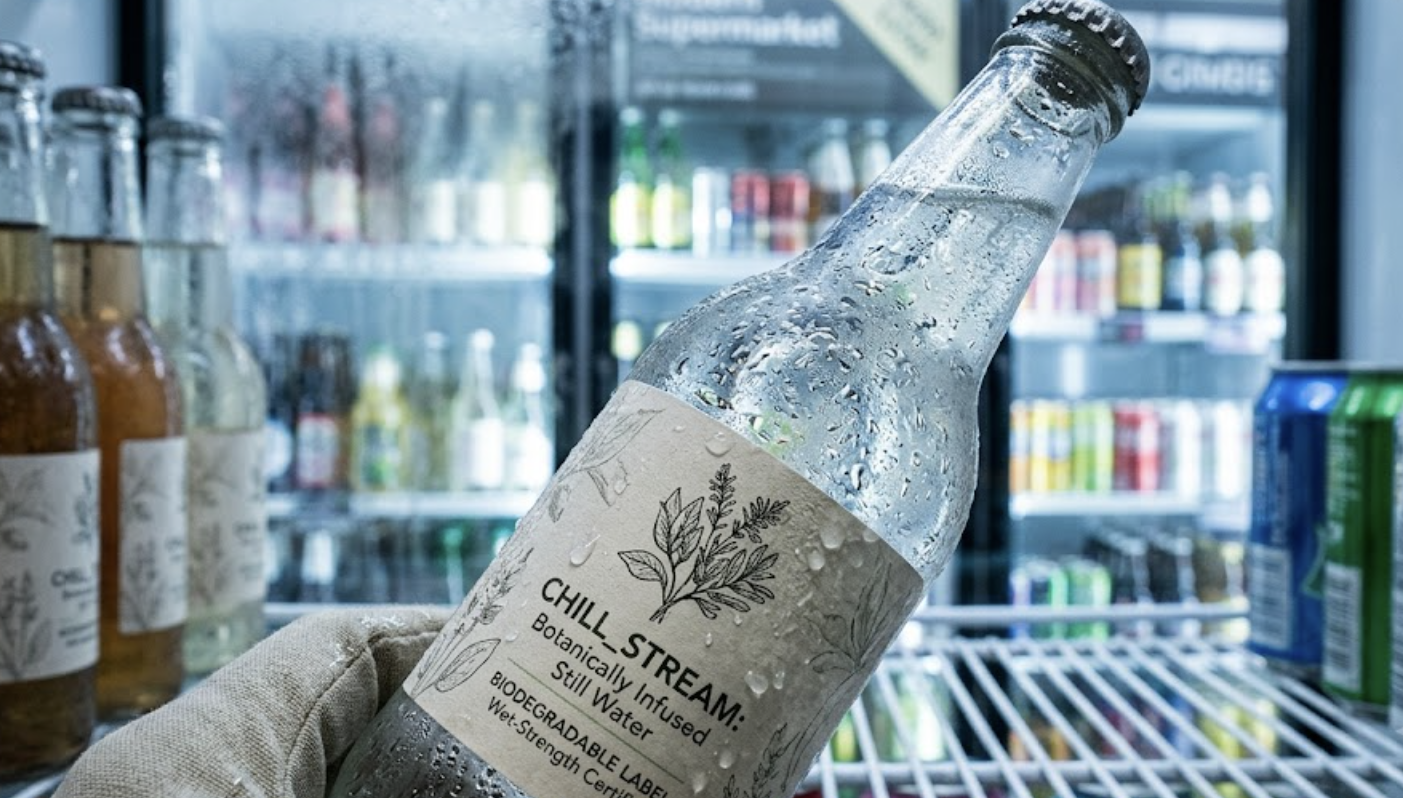
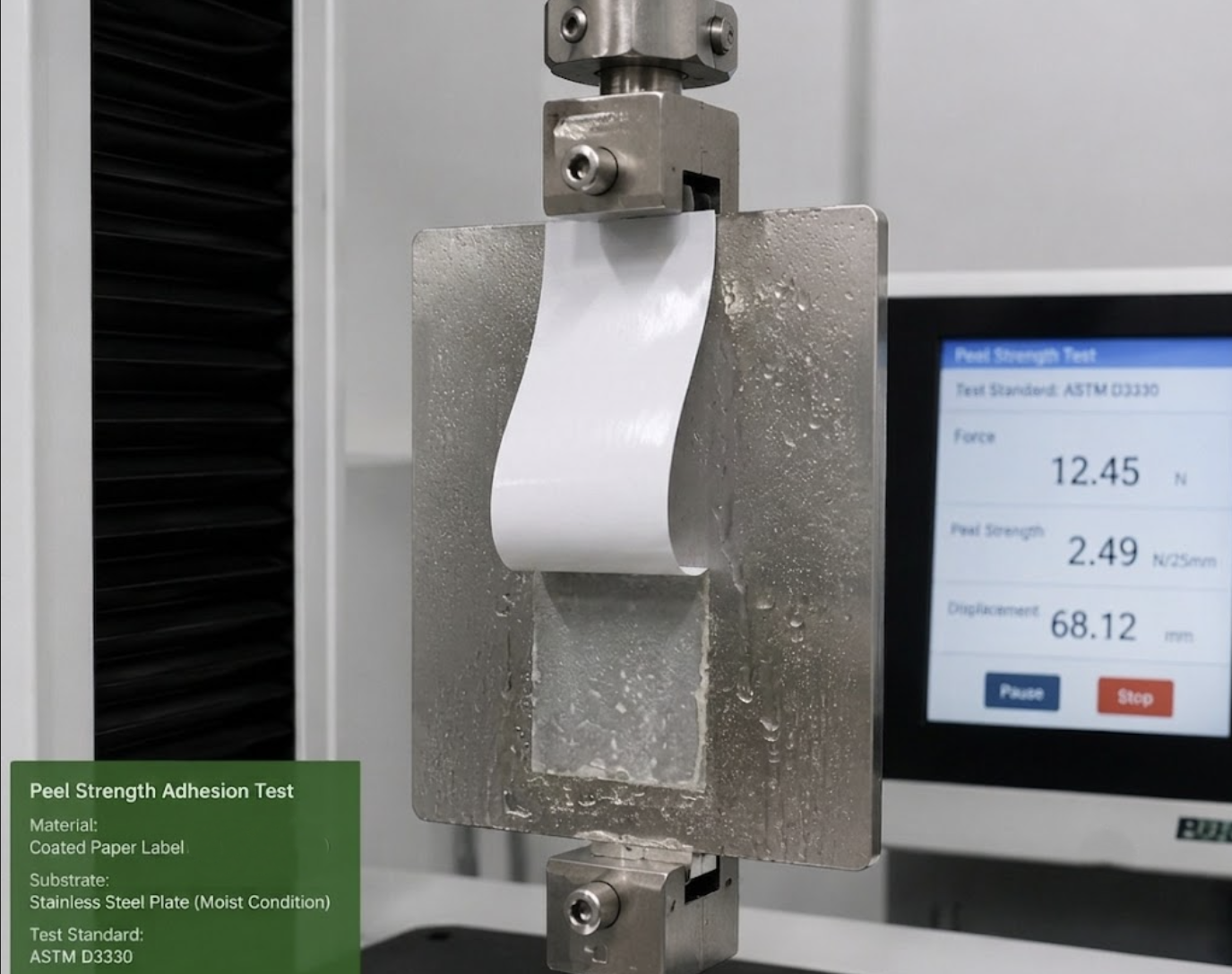
Adhesion operates through molecular attraction between the adhesive and the substrate surface. When an interfacial water layer forms between the two, that molecular contact breaks down. Chilled produce and refrigerated packaging naturally accumulate condensation, and even brief exposure to humid air during shelf restocking introduces surface moisture that conventional acrylic and rubber-based adhesives struggle to displace.
Temperature compounds the problem. Many standard pressure-sensitive adhesives lose tack below 5 degrees Celsius, which places them below functional thresholds in refrigerated retail environments. Surface energy mismatches between the adhesive chemistry and the substrate material amplify moisture-related failure, since water molecules preferentially occupy the interface rather than being displaced by the adhesive.
This failure mode appears most frequently in several retail environments: fresh produce displays where misting systems maintain humidity, chilled beverage coolers where bottles cycle between refrigeration and ambient temperature, dairy sections where packaging surfaces remain cold throughout shelf life, and floral displays where stem moisture migrates to label contact points. Consequently, brand owners switching to biodegradable labels often discover adhesion problems only after the product reaches retail rather than during internal testing.
Q2 — What Makes a Water-Based Compostable Adhesive Behave Differently?
Water-based biodegradable adhesives operate on fundamentally different chemistry than solvent-based or hot-melt systems. The formulation typically centers on natural or bio-derived polymers such as starch derivatives, plant proteins, or modified cellulose, dispersed in an aqueous carrier that evaporates after application. Critically, water-based does not mean water-soluble once cured; the polymer network that forms after drying resists re-wetting under normal retail humidity conditions.
Polymer selection affects both initial tack and long-term bond stability. Natural rubber latex provides strong initial adhesion and maintains flexibility across temperature ranges, while modified starches offer lower cost but narrower performance windows. Hybrid formulations combine multiple polymer types to balance tack, cohesive strength, and aging stability.
Performance ranges vary considerably. Well-formulated water-based biodegradable adhesives maintain functional adhesion from freezing temperatures up to 40 degrees Celsius and across relative humidity ranges from 30% to 85%. However, these ranges depend on precise formulation and coating weight, which makes supplier consistency a more critical variable than catalog claims about adhesive type.
Q3 — How Do PLA and Cellulose Substrates Influence Adhesion Performance?
Substrate selection interacts directly with adhesive performance, particularly under moist conditions. PLA film presents a smooth, low-energy surface that many adhesives struggle to wet adequately. The material resists moisture absorption, which helps maintain dimensional stability but requires adhesive formulations with lower surface tension to achieve reliable initial contact. PLA's stiffness also limits conformability, which matters when labeling irregular produce surfaces.
Cellulose-based label stock behaves quite differently. The material absorbs ambient moisture, which can cause dimensional changes that stress the adhesive bond. However, cellulose's porous structure also allows certain adhesive types to penetrate and create mechanical interlocking alongside molecular adhesion. This dual bonding mechanism can outperform purely surface-level adhesion when properly matched. Each substrate therefore requires tailored adhesive selection rather than universal application.
Q4 — How Should Adhesive and Substrate Be Matched to Specific Retail Applications?
Different retail environments impose distinct performance requirements that guide adhesive-substrate pairing. Fresh produce stickers demand low initial tack to prevent fruit skin damage during removal, combined with sufficient holding power to withstand misting and consumer handling. Residue-free removal becomes essential, since adhesive residue left on edible skins triggers consumer complaints. Self-adhesive biodegradable eco-friendly home compostable sticker labels designed for this application typically pair modified starch adhesives with cellulose substrates, calibrated for clean removal without tearing the fruit surface.
Wine and spirits bottle labels face a different challenge. Ice-bucket condensation creates one of the most demanding moisture exposure scenarios in retail, with sustained water contact and temperature cycling between refrigeration and ambient conditions. These applications benefit from higher-tack adhesives combined with moisture-resistant substrates such as treated cellulose or coated PLA, which maintain bond integrity even when the bottle surface remains wet for extended periods.
Chilled dairy and ready-meal packaging operates within refrigeration throughout its shelf life. Labels must adhere reliably at 2 to 4 degrees Celsius and resist the condensation that forms when packages are removed for consumer inspection. Adhesive formulations for this category prioritize low-temperature performance over high-tack, since the bond never experiences ambient warming until after purchase.
Cosmetic and personal care products encounter bathroom humidity exposure, which differs from refrigeration but still challenges adhesion stability. Labels in this category require moisture resistance without the low-temperature performance demanded by food applications. YiTo Pack structures its biodegradable label offerings around these application categories, with adhesive-substrate combinations developed specifically for each rather than generic solutions applied across all uses.
Q5 — What Should Buyers Verify Before Committing to a Biodegradable Label Supplier?
Several verification steps expose adhesion weaknesses before scaled procurement begins. Adhesion testing under simulated retail conditions provides more reliable data than standard peel-strength measurements conducted at ambient temperature and humidity. Testing protocols should replicate the actual environment: refrigerated storage for chilled applications, condensation cycling for beverage labels, and misting exposure for produce stickers. Suppliers who offer or accommodate such testing demonstrate operational familiarity with real failure modes rather than theoretical performance.
Certification documentation for compostable adhesive components matters as much as substrate certification. Labels marketed as compostable must decompose as a complete assembly, which means both facestock and adhesive require third-party verification under relevant standards such as EN 13432, ASTM D6400, or OK Compost HOME. Suppliers who provide component-level certification separate adhesion performance from sustainability claims in a way that supports compliance audits.
Production-batch consistency in adhesive coating weight directly affects field performance. Inconsistent coating produces labels that may adhere well in sampling but fail intermittently in production volumes. Buyers conducting serious supplier evaluation should request samples from multiple production batches rather than relying on a single representative submission, since adhesive application tolerances reveal themselves only across batch-to-batch comparison.
The sample evaluation sequence itself deserves structure. Initial visual inspection identifies obvious defects, but functional testing under target retail conditions exposes performance gaps that visual inspection cannot detect. Subjecting samples to overnight refrigeration, condensation exposure, and peel testing after conditioning provides a more accurate preview of production-scale performance than immediate evaluation at ambient conditions.
Secure adhesion on moist retail surfaces depends on engineering decisions made at the adhesive formulation and substrate selection stage rather than corrective measures applied during label application. Brand owners switching to biodegradable labels achieve reliable results when they treat adhesive-substrate matching as a technical specification problem rather than a generic material swap. YiTo Pack maintains open consultation channels for buyers evaluating biodegradable label programs, with further information accessible through https://www.yitopack.com/.
HuiZhou YITO Packaging Co., Ltd.
HuiZhou YITO Packaging Co., Ltd.
+86 159 7508 6317
email us here
Visit us on social media:
LinkedIn
Instagram
Facebook
YouTube
Legal Disclaimer:
EIN Presswire provides this news content "as is" without warranty of any kind. We do not accept any responsibility or liability for the accuracy, content, images, videos, licenses, completeness, legality, or reliability of the information contained in this article. If you have any complaints or copyright issues related to this article, kindly contact the author above.
